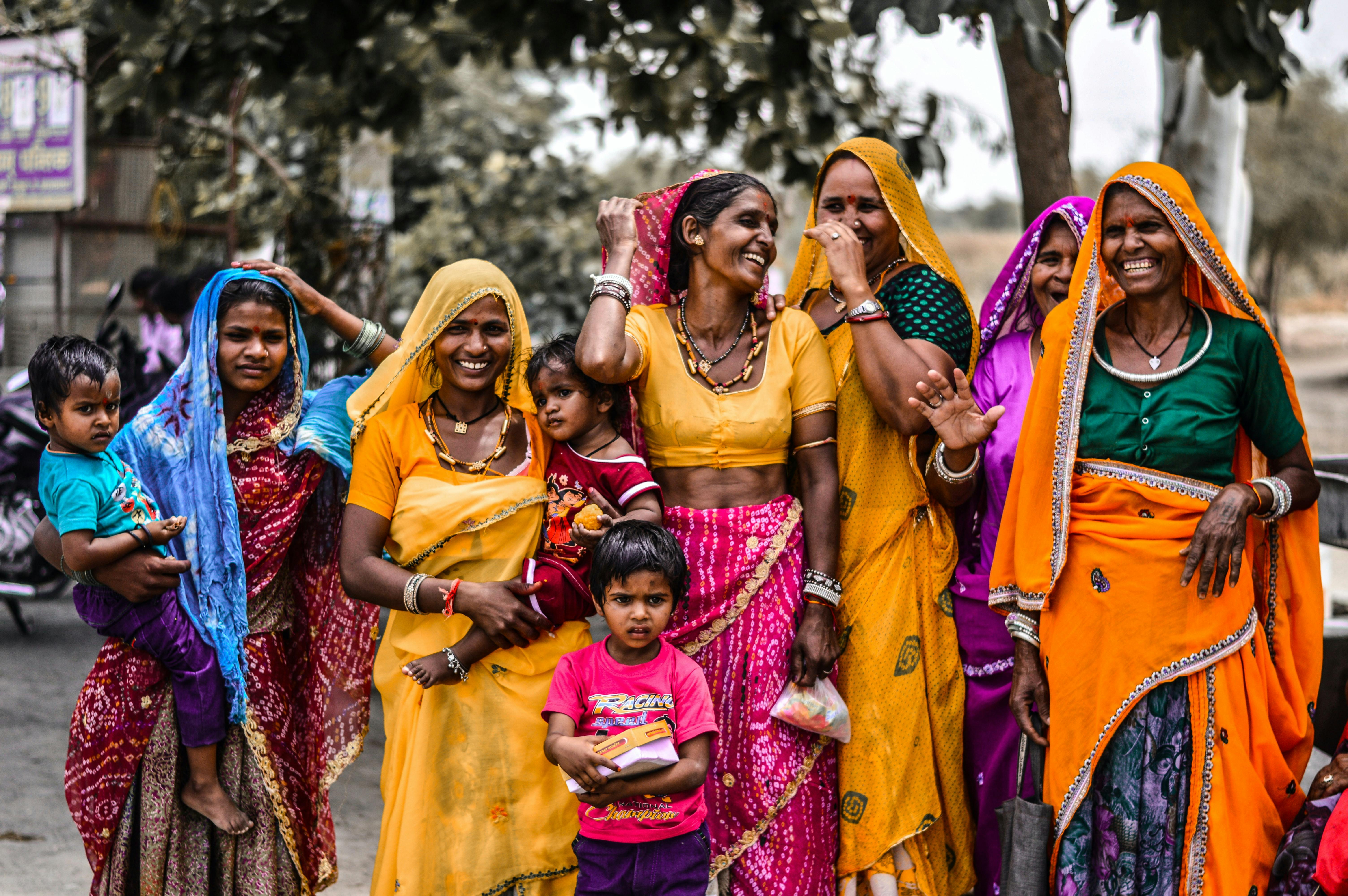
#empowerment #Narishakthi
Admissions 2026
Women Empowerment in India in a Capsule
Author:
Dr. Jayasri Indiran
Dr. Jayasri Indiran
  • Research
  • Quality Education,Gender Equality,Decent Work and Economic Growth,Reduced Inequalities
  • 25-11-2025
Women Empowerment in India in a Capsule
Views(956)
0 Comments

On the waves of the Sustainable Development Goals and connected Diversity, Equity and Inclusion (DEI) initiatives, it is necessary to understand women empowerment as a contributory factor of the national per capita growth. Generally, women empowerment is an issue of various dilemmas leading to debates across the globe. If we ask if women empowerment is needed, there will be responses, equally positive and negative in nature.  The irony of the issue is, even women have both of these emotions concerned with the empowerment of women.

Women Empowerment is expected to be not only in policies and laws, but also in the minds of people, their traditions and culture. The way people look at women and take them ‘for granted’ need to be changed. As the country buzzes with a mission of empowered India through empowered women, by the Nari-Sakthi initiatives, it is necessary to address the basic issues of this aspect, right from a small unit of a society to larger establishments.

In this context, The Gender Centre at the Indian Institute of Management Ahmedabad (IIMA) has released a Women Empowerment Index (Counter View, 2024) that covers four major areas of empowerment and their contributions in uplifting the status and existence of women across the country. They are,

i) Decision-making autonomy and physical mobility,

ii) Control over financial resources and economic empowerment,

iii)  Educational and informational empowerment, and

iv) Work-life balance (Counter View, 2024).

The report highlights the distinct challenges across the country especially, in 705 districts. As reported by the National Family Health Survey NFHS-4 and NFHS-5 (Counter View, 2024) for women aged 15 to 49 reveals that those challenges range from limited access to education and poor economic conditions to difficulties in achieving a sustainable standard of life including work-life balance.

The key findings of the survey are:

There is 67.5% progress in decision-making and mobility among women;
Around 5% increase (from 29.09% to 35%) in the property ownership rights comparing the NFHS-4 to the NFHS-5;
Though there is a significant improvement in literacy rates 46% of districts are noted as educationally empowered;
Due to the pressure of domestic unpaid labor, only 32.25% have reported that they have achieved work-life balance and there is at least 4% increase in completing higher education between the period of two surveys (the NFHS-4 to the NFHS-5) and
Around 7% increase in engagement with mass media has been recorded between the two survey periods, (the NFHS-4 to the NFHS-5).


Central level Initiatives in Women Empowerment space

Nari Shakti

In the background of the aforementioned, let’s understand some of the initiatives taken by the Government of India with an aim to fulfil the agenda ‘Nari Shakti’, (GOI, 2024). 

The initiative that triggered a huge hue and cry was the bold decision of giving 33% reservation to women. The scheme is known as ‘Nari Shakti Adhiniyam’.
The National Sex Ratio improved to 1020 for the first time in the history of the country. 
Paid maternity leave has been increased to 26 weeks.
PM Surakshit Matritva Abhiyan is a scheme under which over 4.73 Crores of pregnant women were examined for their well-being and nutritional status upgradation.
3.2 Crores of Sukanya Samruddhi Yojana accounts were opened for the girl child’s education and marriage.
Under the Pradhan Mantri Ujjwala Yojana (PMUY) scheme, around 10 Crores of smoke-free kitchens (LPG Gas Cylinders) were provided.
Under the PM Awas Yojana Gramin around 72% of women got ownership of households.
Maternal Mortality Rate (MMR) has been reduced to 97 per lakh live births in 2018-20 from 130 per lakh live births in 2014-16.
In terms of Muslim Women Empowerment, abolition of Triple Talaq has been implemented.
Under the PM Mudra Yojana, 69% of the loans have been sanctioned to women entrepreneurs and 84% of them are part of the Stand-Up India mission.
Permanent Commission has been granted to Women Officers in 12 Arms and Services.
Among the country’s total STEM graduates, 43% are women which is highest in the world.


‘Mission Shakti’ (GOI, 2024) is a scheme focusing on women safety, security and empowerment by the Government of India. It insists on making women equal partners in nation-building through convergence and citizen-ownership. This mission comprises of two sub-schemes such as, ‘Sambal’ and ‘Samarthya’.

‘Sambal’ is a sub-scheme that takes care of their safety and security through One Stop Centre (OSC), Women Helpline (WHL) and Beti Bachao Beti Padhao (BBBP) initiatives with Nari-Adalat.

‘Samarthya’ fully encompasses initiatives for women empowerment that includes:

Pradhan Mantri Matru Vandana Yojana (PMMVY) which enables women in family way covering both mother and child’s life-cycle support and care;
Hub for Empowerment of Women is a government-lead initiative that serves as a one-stop center for women’s support and development at the national, state and district levels. It includes services such as healthcare, education, employment, financial inclusion and more to streamline access to government schemes. 
Shakti Sadan - home for women in distress and difficult circumstances like harassment, domestic violence and ailments providing shelter, food, clothing, counselling, primary health facilities and other daily requirements, including vocational training and such functional literacy facilities;
Sakhi Niwas-a hostel facility for working women, Palna-1 & 2 that provide creche and day care facilities for infants.


State Level Initiatives

The central level initiatives have given the state level initiatives a wider spectrum in terms of women empowerment as follows:

‘Lakhpati Didis' is an Uttar Pradesh based initiative that provides financial support to self-help groups that enables them to take part directly in the nation’s economy by stepping into the local and online markets, (HT, 2024).
GreenKraft, incubated by Industree Foundation, is another such initiative that offers only made in India products, made and owned by women-led producer groups, who are members of different Self-Help Groups (SHGs) in Tamil Nadu, Karnataka, and Odisha, (Bizz Buzz, 2024).
From the state of Maharashtra, ‘Chief Minister Majhi Ladki Bahin’ is an initiative that funds at least two women from every household and supports them in their family economy and makes them independent for their day-to-day requirements, (One India, 2024).  
‘Holy City Rickshaws’ operated by the women of Varanasi unites the local women from the communities below poverty lines having tied up with the local tourist homes and travel agencies for their business promotions and B2B operations, (ETTravel World, 2024).  
The government of Uzbekistan tied up with the Asian Development Bank (ADB) has been supporting low income groups with long-term and affordable housing loans through the Mortgage Market Sector Development Program which has shown reasonable increase in confidence and empowerment among women borrowers across the country, (Adham K., 2024).
The Shakti Scheme in Karnataka (Government of Karnataka, 2024)) and the Vidiyal Payanam in Tamil Nadu as a part of the Zero-Ticket Travel Scheme offer free bus services to women within the state, (Nandhini K., 2024).
The Mahila Coir Yojana scheme by Kerala, promotes women’s participation in coir trade, (Ministry of MSME, 2024). 
The Indira Mahila Shakti Udyam Protsahan Yojana (IMSUPY) of Rajasthan encourages women entrepreneurs through financial aid (Government of Rajasthan, 2024).
The WE Hub of Telangana promotes and fosters women entrepreneurship through business incubation and the government-supported incubators of Karnataka are mandated to reserve at least 10% seats for women-led startups. Soft-loans to women-led startups (Kerala) and 50% of venture capital funds earmarked for women entrepreneurs (Tripura) are also initiatives that are focusing mainly on entrepreneurial development among women. 
Andhra Pradesh government has granted permission to Women to Work in Multiple Shifts that enables them to efficiently handle their career and family chores and subsidies on power, lease rentals and exhibition costs to women entrepreneurs.


In short, employment status and economic freedom are the two major forces of women empowerment. Addressing this, in March 2025, Lal Bahadur Shastri National Academy of Administration (LBSNAA), Missouri conducted a Round Table Discussion on Improving Female Workforce Participation in India. It also recorded India’s Female Labor Force Participation Rate (FLFPR) at 41.7% (PLFS 2023-24) against 22% (2017-18), showing nearly 20% raise in women’s participation in the country's economy. The female unemployment rate decreased from 5.6% in 2017-18 to 3.2% in 2023-24. In the same period, self-employment among women increased from 52% to 67% and the number of women-owned MSMEs also nearly doubled to 26%. Thus, in a very short period of time (4 years), the march towards women empowerment by India, has been directed towards new heights.

Let’s wait and watch for what more will come in the long run!

References:

Adham, K. (2024). ADB supports housing finance in Uzbekistan. Asian Development Bank.

Bizz Buzz. (2024). GreenKraft. Industree Foundation.

Counter View. (2024). 67.5% districts empowered women in decision-making, mobility: IIM-A study. Hindustan Times.

Directorate of Information Technology, Government of Tripura. (2024). Tripura Start-Up Policy 2024.

ETTravel World. (2024). Empowering women through sustainable tourism: Intrepid launches 'Holy City Rickshaws in Varanasi. The Economic Times. 

Government of Andhra Pradesh. (2024). Andhra Pradesh Industrial Development Policy 2023 (Fiscal Incentives). National Single Window System.

Government of India. (2024). Mahila Coir Yojana. myScheme.

Government of India. (2024). Mission Shakti Guidelines. Ministry of Women and Child Development.

Government of India (2024). Nari Shakti: From Women Development to Women led Development. 

Government of Karnataka. (2024). Karnataka Startup Policy 2015-2020. Startup India.

Government of Karnataka. (2024). Shakti Scheme. Seva Sindhu Services.

Government of Kerala. (2024). Soft Loan Scheme for Women Entrepreneurs. myScheme.

Government of Rajasthan. (2024). Indira Mahila Shakti Udyam Protsahan Yojana (IMSUPY). myScheme.

Government of Telangana. (2024). WE Hub. Invest in Telangana.

HT. (2024). ‘Over 17L women become Lakhpati Didis in Uttar Pradesh’. Hindustan Times.

One India. (2024). Mukhyamantri – Mazi Ladki Bahin Yojana. Nashik District Official Website.

Samayam Tamil. (2024). Tamil Nadu Magalir Vidiyal Payanam Scheme.

Share:
Comments: