

Microfinance is fundamentally more than just the provision of small-scale financial services; it is a critical instrument of socioeconomic engineering designed to dismantle the structural barriers that keep marginalized populations trapped in a cycle of poverty. In a developing economy as vast and diverse as India, traditional commercial banking systems historically failed to reach the bottom of the economic pyramid. This failure was primarily driven by the "collateral constraint"—the inability of the poor to pledge assets against loans—coupled with the prohibitively high transaction costs associated with servicing millions of microloans in remote, rural topographies.
Microfinance stepped into this void. By substituting physical collateral with "social capital" and peer pressure, it created a revolutionary framework that proved the unbanked poor are not only bankable but also highly creditworthy. Today, the Indian microfinance sector is a multi-billion-dollar industry playing a foundational role in the nation’s pursuit of equitable economic growth. This paper explores the historical evolution of the Indian microfinance landscape, critically examines its direct linkages to the United Nations Sustainable Development Goals (SDGs), and analyzes the systemic challenges it must overcome to ensure long-term sustainability.
The Evolution of Microfinance in India
The trajectory of microfinance in India represents a fascinating shift from fragmented, localized social experiments to a highly structured, digitally integrated, and regulated financial ecosystem.
The Pioneer Years: Cooperatives and the SHG-Bank Linkage
The earliest seeds of microfinance in India can be traced back to the cooperative movement of the early 20th century, though these institutions often succumbed to politicization and elite capture. The true modern genesis occurred in 1992 with the launch of the Self-Help Group (SHG)-Bank Linkage Programme by the National Bank for Agriculture and Rural Development (NABARD). This model was uniquely Indian. Unlike the Grameen model of Bangladesh, which relied on specialized microfinance institutions (MFIs) directly lending to individuals, the NABARD model utilized existing commercial banks. It organized impoverished, predominantly rural women into groups of 10 to 20. These women pooled their meager savings, lent to each other internally, and eventually built enough financial discipline to borrow as a single entity from commercial banks.
A quintessential and highly successful manifestation of this SHG model is the Kudumbashree network in Kerala. Launched in 1998 as a state-sponsored poverty eradication mission, Kudumbashree mobilized millions of women into neighborhood groups moving beyond mere credit provision into micro-enterprise development, localized farming, and profound socio-political empowerment. Models like the Kudumbashree network demonstrated that when credit is coupled with community organization, the economic impact is exponentially magnified.
The Rise of NBFC-MFIs and the Joint Liability Group (JLG) Model
While the SHG model was resilient, it was slow to scale. By the late 1990s and early 2000s, specialized Non-Banking Financial Company-Microfinance Institutions (NBFC-MFIs) began to dominate the landscape. Utilizing the Joint Liability Group (JLG) model, where smaller groups of 4 to 10 individuals cross-guarantee each other’s individual loans, these private institutions attracted vast amounts of commercial capital and private equity. Driven by aggressive expansion targets and a shift toward commercialization, the sector grew at a breakneck pace, transforming microfinance into a highly profitable enterprise.
The 2010 Andhra Pradesh Crisis and Regulatory Renaissance
This hyper-commercialization culminated in a devastating systemic shock. By 2010, the state of Andhra Pradesh reached a breaking point, accounting for roughly a third of the country's microfinance portfolio. A toxic combination of aggressive lending targets, multiple loans issued to the same vulnerable households, and alleged coercive recovery practices led to severe over-indebtedness and tragic borrower suicides. In response, the state government passed an ordinance that effectively halted all MFI operations overnight, plunging the entire Indian sector into an existential crisis.
This pivotal event necessitated a regulatory review. The Reserve Bank of India (RBI) constituted the Malegam Committee, whose recommendations fundamentally reshaped the industry. The RBI created a specific regulatory category (NBFC-MFI), instituted strict caps on interest rates and borrowing margins, mandated the use of credit information bureaus (like Equifax and Highmark) to prevent multiple lending, and established strict fair-practices codes. This regulatory renaissance stabilized the sector, shifting the focus back from aggressive profit-maximization to responsible financial inclusion.
Catalyzing the Sustainable Development Goals (SDGs)
The core mandate of the Indian microfinance sector is inextricably tied to the 2030 Agenda for Sustainable Development. By channeling capital to the grassroots, microfinance acts as an accelerator across multiple critical SDGs.
SDG 1: No Poverty
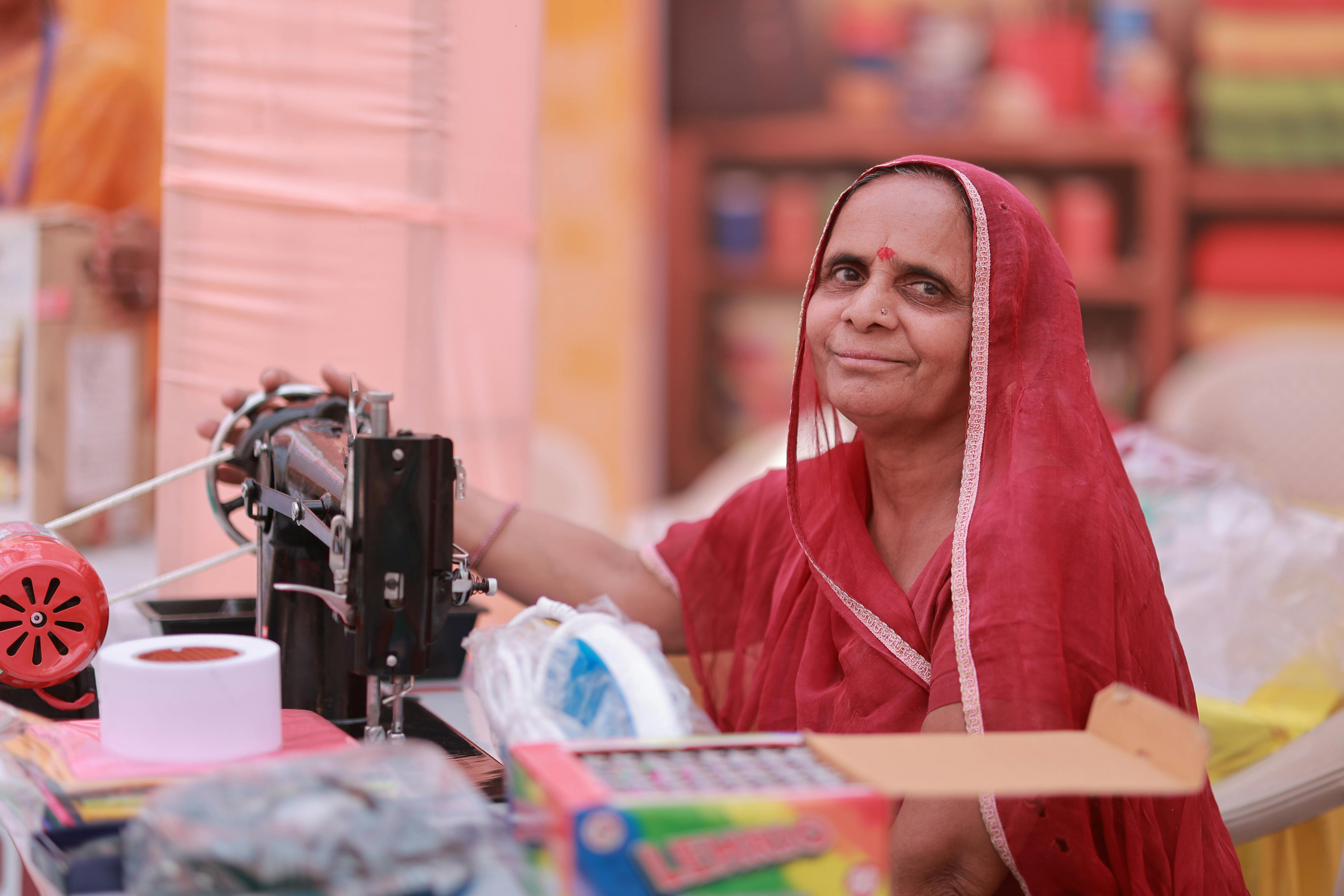
Microfinance directly combats poverty by supplying liquidity to the areas that require it the most. Access to micro-credit allows individuals to shift from day-to-day subsistence to strategic income-generating activities. Whether it is purchasing a sewing machine, buying livestock, or stocking a small retail kiosk, these micro-investments build physical assets and stabilize household cash flows. Furthermore, micro-savings and micro-insurance products provide a vital safety net, ensuring that sudden economic shocks—such as a medical emergency or crop failure—do not push vulnerable families back below the poverty line.
SDG 5: Gender Equality and Women’s Empowerment
The Indian microfinance sector is overwhelmingly female-centric, with women comprising over 98% of the borrower base. This is by design, as global data consistently shows that women are more reliable repayers and are more likely to invest returns back into the family's health and education. By placing capital directly into the hands of women, microfinance subverts traditional patriarchal structures. It grants women greater financial autonomy, elevates their decision-making power within the household, and facilitates their transition from unpaid domestic labor to recognized economic participants.
SDG 8: Decent Work and Economic Growth
India’s economy is heavily reliant on the informal sector, which employs the vast majority of its workforce. Microfinance provides the lifeblood for Micro, Small, and Medium Enterprises (MSMEs). By funding these grassroots businesses, the sector stimulates localized job creation and encourages the formalization of local economies. It allows micro-entrepreneurs to scale their operations, hire local labor, and contribute to the broader macroeconomic growth engine of the country.
SDG 10: Reduced Inequalities
Economic inequality in India is stark, characterized by a massive wealth gap between the urban elite and the rural poor. Traditional commercial banking naturally gravitates toward wealthy, urban centers where transaction costs are low and ticket sizes are high. Microfinance deliberately works in reverse. By building distribution networks in remote rural and semi-urban hinterlands, the sector redistributes economic opportunity. It democratizes access to capital, actively working to bridge the geographic and socioeconomic divides that perpetuate inequality.
Current Bottlenecks and Systemic Challenges
Despite its remarkable recovery and socio-economic contributions, the Indian microfinance sector continues to grapple with complex operational and ethical challenges that threaten its long-term efficacy. Chief among these is a pronounced geographic skew in credit distribution. Historically, operations have been densely concentrated in Southern and Eastern states, with regions like Kerala experiencing high market penetration and, in some cases, outright saturation. In stark contrast, vast tracts of Central, Western, and Northeastern India remain severely underserved, despite harboring some of the country's highest concentrations of poverty. The sheer financial cost and logistical complexity of expanding into these frontier geographies often act as a deterrent for purely profit-driven microfinance institutions (MFIs).
Compounding this uneven distribution is the persistent threat of over-indebtedness among vulnerable populations. Even though mandates from the Reserve Bank of India requiring the use of credit bureaus have significantly curtailed the practice of multiple lending, borrowers at the bottom of the economic pyramid still juggle highly volatile cash flows. To manage this instability, many individuals resort to borrowing from informal, unregulated moneylenders simply to pay off their formal MFI loans, effectively hiding their true debt burden from official oversight and remaining trapped in a cycle of debt.
Furthermore, servicing remote clients—delivering tiny cash loans and collecting weekly or monthly repayments—creates massive operational overhead. Consequently, MFI interest rates remain disproportionately high, often hovering between 20% and 25%, which is significantly steeper than traditional commercial bank loans. This elevated cost of borrowing fuels an ongoing ethical debate surrounding "mission drift." As MFIs increasingly rely on private equity and capital markets for funding, they face immense pressure to generate high returns on equity. Ultimately, the central tension defining modern microfinance is the daily struggle to balance this commercial imperative of satisfying shareholders with the foundational social mission of keeping credit affordable and accessible for the poor.
Future Frontiers and Emerging Trends
To remain relevant and sustainable in the 21st century, the Indian microfinance sector is currently undergoing a radical structural transformation driven by both technological innovation and urgent environmental imperatives.
At the forefront of this evolution is the unequivocal shift toward digital integration, propelled by the nation's "JAM Trinity" : Jan Dhan (universal bank accounts), Aadhaar (biometric identity), and mobile connectivity. Transitioning from historically cash-heavy operations to digital disbursements and UPI-based (Unified Payments Interface) collections offers immense structural benefits. It drastically reduces operational overhead, mitigates the physical risks associated with cash transit, and helps borrowers build formal, verifiable digital credit footprints. However, institutions must navigate this transition with caution to avoid exacerbating a "digital divide." The sector must ensure that the rush toward efficiency does not inadvertently exclude the very populations it aims to serve, particularly those lacking fundamental digital literacy or access to reliable smartphones.
Parallel to this digital shift, the sector must confront the escalating, existential threat of climate change. The core demographic served by microfinance—predominantly rural agrarian communities—is disproportionately exposed to environmental shocks. Erratic monsoons, severe droughts, and devastating floods can decimate agricultural livelihoods overnight, instantly eroding a borrower's repayment capacity and threatening to plunge them back into extreme poverty. In response, a critical pivot towards "Green Microfinance" is becoming non-negotiable. This strategy involves moving beyond traditional credit to develop specialized, climate-adaptive financial products. It necessitates the deployment of parametric micro-insurance for extreme weather events, targeted credit lines for climate-resilient agricultural inputs, and bespoke loans specifically tailored to finance sustainable assets like solar-powered water pumps and off-grid renewable energy solutions. Together, these digital and ecological frontiers represent the next vital evolutionary phase for Indian microfinance, ensuring it remains a resilient engine for inclusive, future-proof growth.
Conclusion
The growth of the Indian microfinance sector shows how financial innovation can help fix long-standing social and economic problems. From the community-driven SHG models to the highly regulated, tech-enabled NBFC-MFIs of today, the sector has proven that financial inclusion is a prerequisite for achieving the Sustainable Development Goals.
However, microfinance is not a panacea. It is a tool that requires careful calibration. As the industry looks to the future, it must navigate the delicate "double bottom line," ensuring institutional financial viability while unwaveringly protecting the welfare of the borrower. By addressing regional disparities, maintaining strict guardrails against over-indebtedness, and pioneering digital and climate-resilient financial products, the Indian microfinance sector can continue to serve as a vital engine for inclusive, sustainable economic development.

Copyright © 2026. Rajagiri Business School. All Rights Reserved. Website Designed and Maintained by Intersmart